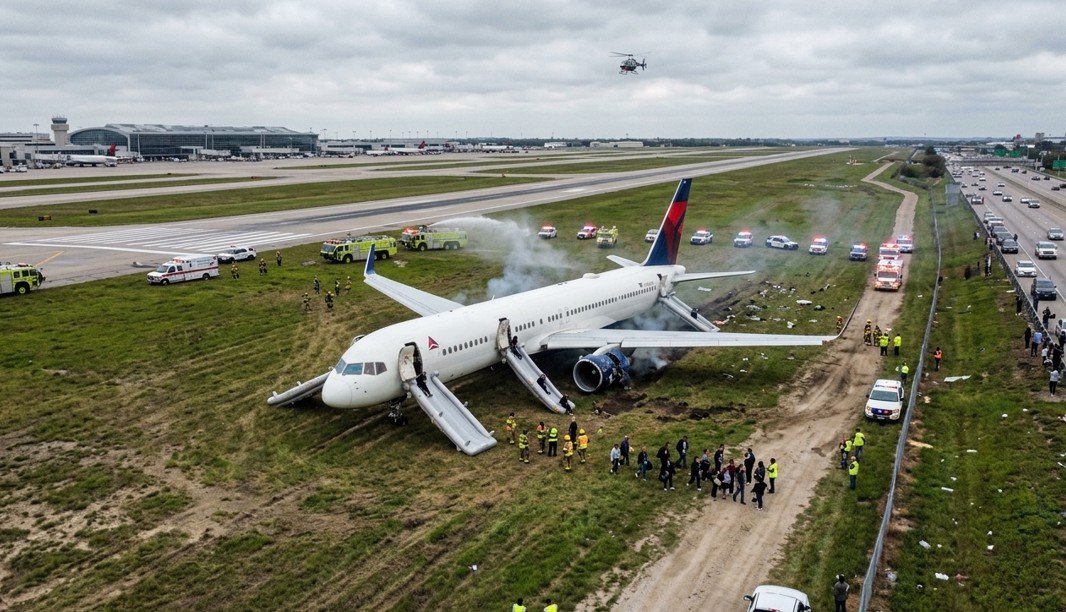
Air travel feels simple today. You board, sit back, and trust the journey. Yet sometimes, a flight reminds us how much happens behind the scenes. The Delta Connection DL3543 Emergency Landing is one such moment that caught wide attention.
I remember once sitting on a flight when the captain’s tone changed. It was calm, but serious. That shift alone made everyone pause. Something similar happened on this flight.
On February 17, 2025, what started as a normal trip quickly turned into a situation that required quick thinking. Thankfully, the story ended safely. But it left behind important lessons about aviation safety.
In this article, we explore the Delta Connection DL3543 Emergency Landing, step by step, in a simple and human way.
A Normal Flight That Suddenly Changed
Flights often begin the same way. Passengers settle in. Some scroll through their phones. Others nap or read a book.
That day, DL3543 looked no different. The aircraft departed smoothly. The weather was clear, and nothing seemed unusual.
But mid-air, things shifted. A cockpit alert appeared. These alerts are not taken lightly. Even a small warning can mean a bigger issue.
The pilots did not panic. Instead, they followed training. Within minutes, they made a key decision. The plane would return for safety.
This moment marked the start of the Delta Connection DL3543 Emergency Landing.
What Does an Emergency Landing Really Mean?

The phrase can sound scary. But in aviation, it often means caution, not danger.
An emergency landing is a safety-first move. Pilots choose it when something feels off. It is like stopping your car when a warning light appears.
During the Delta Connection DL3543 Emergency Landing, the crew acted early. That decision reduced risk.
Many people think emergency means disaster. In reality, it often prevents one. That is the power of modern aviation.
Timeline of the Incident
Understanding events step by step helps reduce fear. Let’s break down the Delta Connection DL3543 Emergency Landing timeline.
| Time | Event |
|---|---|
| Departure | Flight leaves normally |
| Mid-flight | Cockpit warning appears |
| Crew Action | Pilots assess situation |
| Decision | Return planned |
| Announcement | Passengers informed |
| Landing | Safe arrival |
| Aftermath | Aircraft inspected |
Each step shows how structured aviation is. Nothing is random. Every action follows a clear plan.
Inside the Cabin: What Passengers Felt
Imagine sitting by the window. You are relaxed. Then the captain speaks.
The voice is calm, but serious. That alone can raise your heartbeat.
During the Delta Connection DL3543 Emergency Landing, passengers likely felt this shift. Some may have felt fear. Others stayed calm.
But one thing helped. The crew stayed composed.
Flight attendants moved through the cabin. They reassured people. They answered questions with patience.
That calm energy spreads. When crew members stay steady, passengers follow.
The Power of Pilot Training
Pilots do not guess in tough moments. They rely on training.
Every commercial pilot spends hours in simulators. These simulate real emergencies. From engine issues to system alerts, they practice it all.
So when the Delta Connection DL3543 Emergency Landing situation arose, the pilots already knew what to do.
They followed checklists. They communicated clearly. They stayed focused.
This training turns stress into action. It is one reason aviation is so safe.
Possible Causes Behind the Technical Alert
At first, the exact cause was not clear. That is normal in aviation.
Experts usually study many possibilities. These include:
- Mechanical faults
- Sensor errors
- Electrical issues
- Hydraulic problems
- Software glitches
During the Delta Connection DL3543 Emergency Landing, the alert triggered caution. That is its job.
Modern aircraft are built to detect problems early. It is like having a smart warning system that never sleeps.
Why Early Decisions Matter So Much
One thing stands out in this event. The decision was quick.
Pilots did not wait. They did not take chances. They chose safety.
The Delta Connection DL3543 Emergency Landing shows how early action can prevent bigger risks.
Think of it like noticing smoke in your kitchen. You act fast before it turns into fire.
In aviation, seconds matter. Early decisions save lives.
The Role of Cabin Crew in Safety
We often focus on pilots. But cabin crew play a huge role too.
They are trained for emergencies. Not just service.
During the Delta Connection DL3543 Emergency Landing, they likely:
- Checked seatbelts
- Secured the cabin
- Gave clear instructions
- Reassured passengers
Their calm voice can change everything.
I once saw a flight attendant smile during turbulence. That simple act calmed the whole row.
That is the power of human connection.
How Aviation Systems Support Safety
Modern planes are like flying computers. They monitor everything.
During the Delta Connection DL3543 Emergency Landing, these systems likely detected the issue first.
Key systems include:
- Backup controls
- Engine monitoring tools
- Real-time alerts
- Advanced avionics
These tools help pilots act fast. They reduce guesswork.
Technology and human skill work together. That balance keeps flights safe.
Why Emergency Landings Are Not Rare
Many people think these events are rare disasters. That is not true.
Emergency landings happen more often than you think. But most are precautionary.
The Delta Connection DL3543 Emergency Landing fits this pattern.
Pilots choose safety over schedule. Always.
It is better to land early than risk uncertainty.
This mindset protects everyone onboard.
Investigation After the Landing
After landing, the work continues.
Experts study everything. They review:
- Flight data
- Cockpit recordings
- Maintenance history
- System alerts
The goal is not blame. It is learning.
The Delta Connection DL3543 Emergency Landing becomes a lesson for the future.
Each event improves aviation systems.
Key Safety Takeaways
Here are simple lessons from this incident:
- Early action prevents bigger problems
- Training makes a difference
- Communication reduces fear
- Technology supports human decisions
These lessons apply beyond aviation too.
Life often works the same way. Act early. Stay calm. Trust your training.
Quick Facts About the Incident
| Detail | Information |
|---|---|
| Flight | DL3543 |
| Airline | Delta Connection |
| Operator | Endeavor Air |
| Route | Minneapolis to Toronto |
| Date | February 17, 2025 |
| Outcome | Safe landing |
This summary shows how controlled the situation was.
Why This Event Builds Trust in Aviation
It may sound strange, but events like this build trust.
The Delta Connection DL3543 Emergency Landing shows the system works.
Problems are detected early. Crews respond quickly. Passengers stay safe.
That is not luck. It is design.
Aviation improves after every event.
Emotional Impact on Travelers
Even with a safe ending, emotions run high.
Passengers may feel fear, relief, or even gratitude.
The Delta Connection DL3543 Emergency Landing likely created all these feelings.
But in the end, relief wins.
I often think these moments remind us how fragile and strong we are at the same time.
What Travelers Can Learn
If you fly often, this story matters.
Here are simple truths:
- Emergency landings are usually safe
- Pilots train for these moments
- Aircraft have backup systems
- Crew members are highly skilled
The Delta Connection DL3543 Emergency Landing is proof of this.
The Role of Aircraft Maintenance in Preventing Incidents
Behind every safe flight is a strong maintenance system. Aircraft are checked again and again before they ever leave the ground.
After the Delta Connection DL3543 Emergency Landing, engineers would have inspected the aircraft in detail. They look at every system. Nothing is ignored.
Modern planes use sensors that track performance in real time. If something seems off, it gets flagged instantly.
Maintenance teams then study the data. They fix issues before the aircraft returns to service.
This constant cycle of checking and repairing keeps aviation reliable.
Safety Culture: The Backbone of Aviation
One thing I admire about aviation is its mindset. Safety always comes first.
The Delta Connection DL3543 Emergency Landing shows this clearly. The crew did not worry about delays. They focused on protection.
Airlines support these decisions. Pilots have full authority to divert or land.
This culture includes:
- Continuous training
- Strict safety rules
- Real-time monitoring
- Global safety standards
It is a system built on caution, not risk.
How Air Traffic Control Supports Emergency Landings
Air traffic control plays a key role during such events.
When the Delta Connection DL3543 Emergency Landing decision was made, controllers cleared the path. They gave the aircraft priority.
They also guided the pilots with updated information. This includes weather, runway status, and traffic conditions.
Think of them as invisible partners in the sky.
Without their support, coordination would be much harder.
Lessons for the Aviation Industry
Every incident teaches something new. Even when everything ends safely.
The Delta Connection DL3543 Emergency Landing offers important lessons:
- Quick decisions reduce risk
- Communication builds trust
- Training must stay updated
- Technology must keep evolving
Airlines study these events closely. They turn them into training material.
That way, the next crew is even better prepared.
Why Precautionary Landings Are a Good Sign
At first, the word emergency can feel alarming. But in aviation, it often means prevention.
The Delta Connection DL3543 Emergency Landing was not about failure. It was about caution.
Pilots did not wait for a serious issue. They acted early.
This is similar to going to a doctor when you feel unwell. You check early to avoid bigger problems.
That mindset saves lives.
Comparing This Event to Other Aviation Incidents
Not all aviation events are the same. Some involve severe conditions. Others are simple precautions.
The Delta Connection DL3543 Emergency Landing falls into the safer category.
There was no panic landing. No injuries. No damage reported.
This shows how effective modern systems are.
Most incidents today end safely because of early detection and strong training.
Human Factors in Aviation Safety
Technology is powerful, but humans still lead the process.
During the Delta Connection DL3543 Emergency Landing, human judgment mattered most.
Pilots read the situation. Crew members managed passengers. Controllers guided the aircraft.
These human actions shape the outcome.
I believe this balance between machine and human is what makes aviation strong.
The Psychological Side of Mid-Air Alerts
Let’s be honest. Hearing an emergency announcement mid-flight is not easy.
The Delta Connection DL3543 Emergency Landing likely created anxiety in the cabin.
Some passengers may have held their breath. Others may have stayed silent.
But calm communication changes everything.
A steady voice can reduce fear. Clear words can bring control back.
This is why emotional intelligence is part of aviation training.
How Airlines Communicate After Such Events
After the flight, airlines usually share updates.
The Delta Connection DL3543 Emergency Landing would have been reviewed and explained.
Airlines focus on transparency. They reassure passengers. They explain what happened.
This builds trust.
People want honesty, especially after a tense experience.
The Bigger Picture: Aviation Safety Worldwide
When we zoom out, aviation remains incredibly safe.
The Delta Connection DL3543 Emergency Landing is just one event among millions of successful flights.
Safety comes from:
- Global regulations
- Advanced engineering
- Skilled professionals
- Continuous learning
Each flight benefits from decades of progress.
That is why flying remains one of the safest travel methods.
Key Insights from the Incident
Here are the most important takeaways:
- The alert system worked as designed
- The crew responded quickly
- Passengers remained safe
- The landing was controlled
The Delta Connection DL3543 Emergency Landing is a success story in disguise.
It shows how problems are handled, not how they fail.
What This Means for Future Travelers
If you plan to fly soon, this story should give you comfort.
The Delta Connection DL3543 Emergency Landing proves that safety systems work.
Pilots are trained. Aircraft are advanced. Crews are prepared.
Even when something unexpected happens, the system responds.
You are never alone in the sky.
Frequently Asked Questions (FAQs)
1. What caused the Delta Connection DL3543 Emergency Landing?
A technical alert appeared during the flight. The crew chose to return as a precaution.
2. Was the situation dangerous?
No. It was handled early. The landing was safe and controlled.
3. Were passengers injured?
No injuries were reported. Everyone landed safely.
4. Who operated the flight?
The flight was operated by Endeavor Air under Delta Connection.
5. Why do pilots choose emergency landings?
They act when something feels unusual. It helps prevent bigger issues.
6. Are such events common?
Yes, but most are precautionary. They rarely involve danger.
7. Should I feel worried about flying?
No. Events like the Delta Connection DL3543 Emergency Landing show how strong safety systems are.
Final Thoughts
The Delta Connection DL3543 Emergency Landing is more than just a news event. It is a story of preparation, teamwork, and trust.
The pilots made the right call. The crew stayed calm. The system worked.
In the end, every passenger reached the ground safely. That is what truly matters.
Moments like this remind us that safety is not luck. It is built through training, technology, and human care.
Next time you board a flight, remember this. Behind every journey is a network of people working to protect you.
And that is something worth trusting.