
Combination Square vs Speed Square: 5 Must Know Differences
When I first started woodworking, I thought a square was just… a square. Simple, right? Then I stood in a tool shop, staring at two tools that looked similar but felt very different: a combination square and a speed square. That’s when I realized this choice matters more than you think.
If you’ve ever wondered about Combination Square vs Speed Square: 5 Must Know Differences, you’re not alone. This guide breaks it down in a friendly, simple way so you can choose the right tool for your work.
Let’s dive in.
Why This Comparison Matters in Real Life
Imagine this. You’re building a small cabinet. Every joint must fit tight. Even a tiny error ruins the look. Now imagine cutting big plywood sheets on sawhorses. Speed matters more than perfection.
That’s the heart of Combination Square vs Speed Square: 5 Must Know Differences. One tool loves precision. The other loves speed.
Both are great. But each shines in its own space.
What Is a Combination Square?


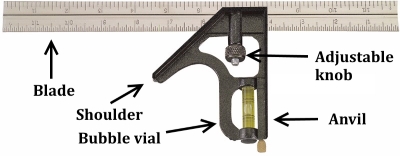
A combination square feels like a careful craftsman. It moves slow, but it never guesses.
It has a steel ruler and a sliding head that locks in place. You can set a measurement and repeat it again and again without error.
I still remember using mine for the first time on a drawer project. I set one measurement and used it across all parts. Everything lined up perfectly. That moment sold me.
What It Does Best
- Repeat exact measurements across many parts
- Check perfect 90° and 45° angles
- Measure depth and height of cuts
- Help with machine setup like saw blades
It’s like having a ruler, square, and gauge all in one tool.
What Is a Speed Square?

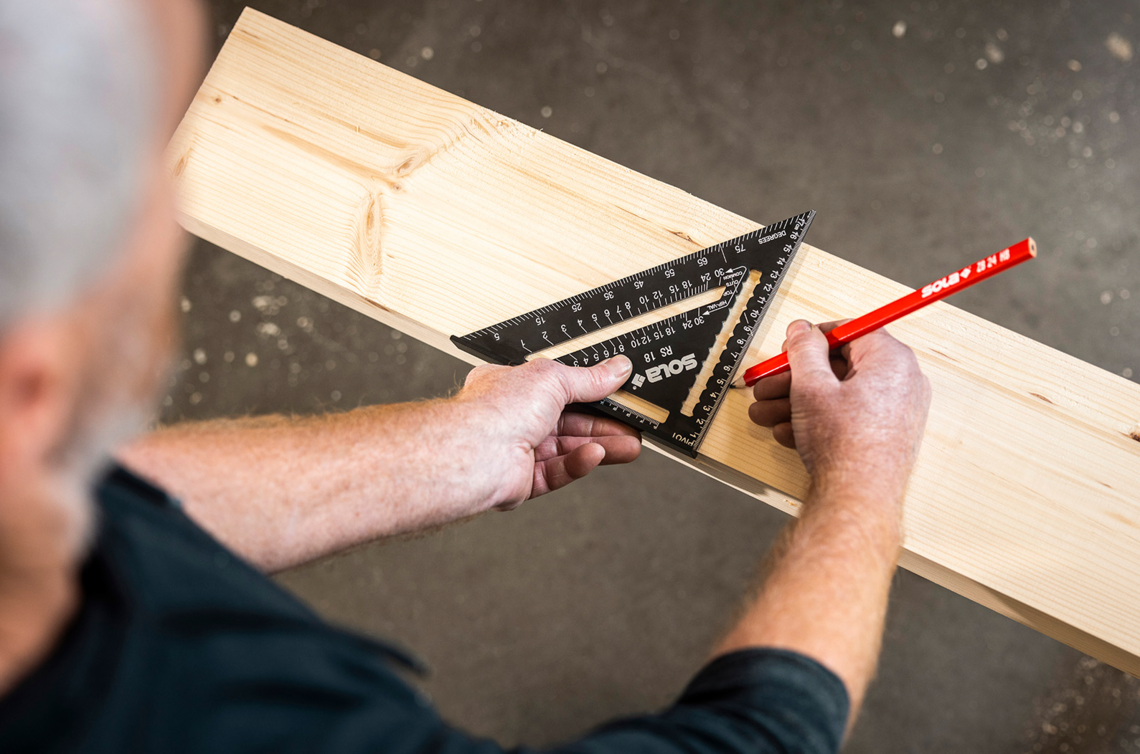

A speed square is the opposite personality. It’s fast, bold, and ready to work on big wood.
It has a triangle shape with a lip that hooks onto wood edges. You place it, draw a line, and move on.
The first time I used one on a 2×4, I finished marking cuts in minutes. It felt like switching from walking to running.
What It Does Best
- Mark quick 90° lines
- Handle common angles fast
- Guide a circular saw for quick cuts
- Work well on large boards and plywood
It’s built for action, not tiny details.
Quick Comparison Table
Before we go deeper into Combination Square vs Speed Square: 5 Must Know Differences, here’s a simple side-by-side view:
| Feature | Combination Square | Speed Square |
|---|---|---|
| Main Use | Precision layout | Fast marking |
| Best For | Joinery and small parts | Framing and large stock |
| Accuracy | Very high | Good enough |
| Extra Use | Depth and height gauge | Saw guide |
| Work Style | Slow and careful | Fast and efficient |
This table gives you a quick feel. Now let’s break down the real differences.
Difference #1: Precision vs Speed
This is the biggest point in Combination Square vs Speed Square: 5 Must Know Differences.
A combination square is all about precision. You set a measurement like 1.25 inches and repeat it perfectly. No guessing.
A speed square is about speed. You hook it, draw a line, and move on. It’s fast but not built for tiny accuracy.
Think of it like cooking. One tool is a measuring scale. The other is a quick scoop.
Both are useful. But for different meals.
Difference #2: Measurement Capability
A combination square is a measurement tool first. You can:
- Set exact distances
- Check depth inside grooves
- Transfer measurements easily
This makes it perfect for fine woodworking.
A speed square, on the other hand, is more about angles and layout. It does not lock measurements.
So if your work needs repeating the same number again and again, the combination square wins.
Difference #3: Type of Projects
Here’s where your choice becomes clear.
Use a Combination Square When:
- Building furniture
- Cutting joinery like tenons
- Setting up tools like table saws
Use a Speed Square When:
- Cutting 2x lumber
- Working on roof angles
- Breaking down sheet goods
In simple words, the combination square lives on the workbench, while the speed square lives on the jobsite.
Difference #4: Accuracy Level
Accuracy matters. But not all work needs the same level.
A combination square is more accurate because:
- It locks measurements
- It has a machined head
- It aligns tightly with edges
A speed square is accurate enough for carpentry. But it’s not built for micro precision.
Here’s a quick trick I use:
- Draw a line
- Flip the square
- Draw again
If the lines match, your tool is true.
Difference #5: Extra Functions
This is where things get interesting in Combination Square vs Speed Square: 5 Must Know Differences.
A combination square acts like a multi-tool:
- Depth gauge
- Height gauge
- Square checker
- Measurement setter
A speed square adds a different kind of value:
- Circular saw guide
- Angle finder
- Quick layout tool
So one adds precision features. The other adds speed features.
Real Workshop Insight
Let me share something honest.
For months, I tried to use only one tool. It didn’t work. I always felt limited.
Once I kept both on my bench, things changed. I used the combination square for careful work and the speed square for fast cuts.
It felt like having the right tool at the right time.
When One Tool Is Not Enough
Here’s the truth most beginners don’t hear.
No single square does everything well.
- A speed square cannot set depth
- A combination square cannot guide a saw
That’s why many woodworkers end up owning both.
And honestly, that’s the smartest move.
How Accuracy Really Affects Your Work
Accuracy is not just a technical word. It shows up in how your project feels in your hands.
When I made my first wooden box, I rushed the layout using a speed square. It looked fine at first. But when I joined the corners, small gaps appeared. That’s when I learned the hard truth.
A combination square gives you tight-fitting joints because it holds a fixed measurement. A speed square, while reliable, is better for rough layout where tiny gaps don’t matter.
So ask yourself:
Do you want “good enough” or “perfect fit”?
Where Each Tool Struggles
No tool is perfect. Understanding limits is key in Combination Square vs Speed Square: 5 Must Know Differences.
Combination Square Limitations
- Slower on large boards
- Needs clean surfaces to stay accurate
- Can lose accuracy if dropped
Speed Square Limitations
- Not ideal for fine joinery
- Cannot set repeat measurements
- Edges wear over time
I once used a worn speed square edge as a saw guide. The cut drifted slightly. That small mistake taught me to respect tool limits.
How to Use a Combination Square Like a Pro
Using a combination square well feels like learning a calm rhythm.
Here are habits that changed my results:
- Keep the rule and head clean
- Always lock the measurement tight
- Double-check before marking
- Use a marking knife for clean lines
When you treat it gently, this tool rewards you with perfect lines every time.
How to Use a Speed Square Without Errors
The speed square is simple, but small mistakes can still happen.
Here’s what helps:
- Press the lip firmly against the edge
- Keep your pencil straight, not tilted
- Use a clean edge for saw guiding
- Don’t rush the placement
It’s a fast tool, but control still matters.
Safety Tips When Using a Square as a Saw Guide
This part is often ignored, but it matters a lot.
When you use a speed square to guide a circular saw:
- Keep your hand away from the blade path
- Clamp the square if the cut feels tight
- Stop using it if the edge is damaged
Think of it like driving. Even a small distraction can cause a big mistake.
Choosing the Right Tool for Your Workflow
Let’s make this practical.
If You Work on Small Projects
Go for a combination square.
- Cabinets
- Drawers
- Furniture parts
You’ll need precision more than speed.
If You Work on Big Cuts
Pick a speed square.
- Framing
- Sheet cutting
- Outdoor projects
Speed saves time here.
My Personal Setup (And Why It Works)
On my bench, I always keep:
- A 6-inch combination square
- A 7-inch speed square
Why both?
Because my work changes. Some days I build small pieces. Other days I cut large panels.
Having both tools feels like having two trusted helpers. One is careful. The other is quick.
Buying Tips for Beginners
If you’re planning to buy one, here’s my honest advice.
For Combination Square
- Look for a solid metal head
- Ensure the rule markings are clear
- Test the lock mechanism
For Speed Square
- Choose thick aluminum for durability
- Check the markings for clarity
- Make sure the lip is straight
Don’t go too cheap. A bad square creates bad work.
Common Mistakes to Avoid
Many beginners make the same errors.
- Using a speed square for fine joinery
- Not checking tool accuracy
- Marking with a dull pencil
- Ignoring edge alignment
I made all of these mistakes early on. Fixing them improved my work instantly.
Why Many Woodworkers Use Both
Here’s something important in Combination Square vs Speed Square: 5 Must Know Differences.
Most experienced woodworkers don’t choose one. They use both.
Why?
Because woodworking has two sides:
- Precision work
- Fast layout work
Each tool handles one side perfectly.
A Simple Metaphor to Remember
Think of it like this:
- A combination square is a surgeon
- A speed square is a builder
One works with care. The other works with speed.
Both are essential.
FAQs About Combination Square vs Speed Square
1. Can a speed square replace a combination square?
No. It can handle basic angles, but it cannot set exact measurements or check depth accurately.
2. Which is better for beginners?
A combination square is better for learning accuracy and measurement skills.
3. Is a speed square accurate enough?
Yes, for carpentry and rough work. But not for tight joinery.
4. Do professionals use both tools?
Yes. Most professionals keep both for different tasks.
5. What size combination square should I buy?
A 6-inch or 12-inch version works best for most projects.
6. Can I use a speed square with a circular saw?
Yes. It works well as a guide for short, straight cuts.
7. How do I check if my square is accurate?
Draw a line, flip the tool, and draw again. If lines match, it’s accurate.
Final Thoughts on Combination Square vs Speed Square
At the end of the day, Combination Square vs Speed Square: 5 Must Know Differences is not about which tool is better.
It’s about which tool fits your work.
If your projects demand precision and repeatability, go with a combination square.
If your work needs speed and efficiency, choose a speed square.
And if you’re serious about woodworking, you’ll likely end up using both.
That’s what happened to me. And honestly, I wouldn’t want to work without either one now.
